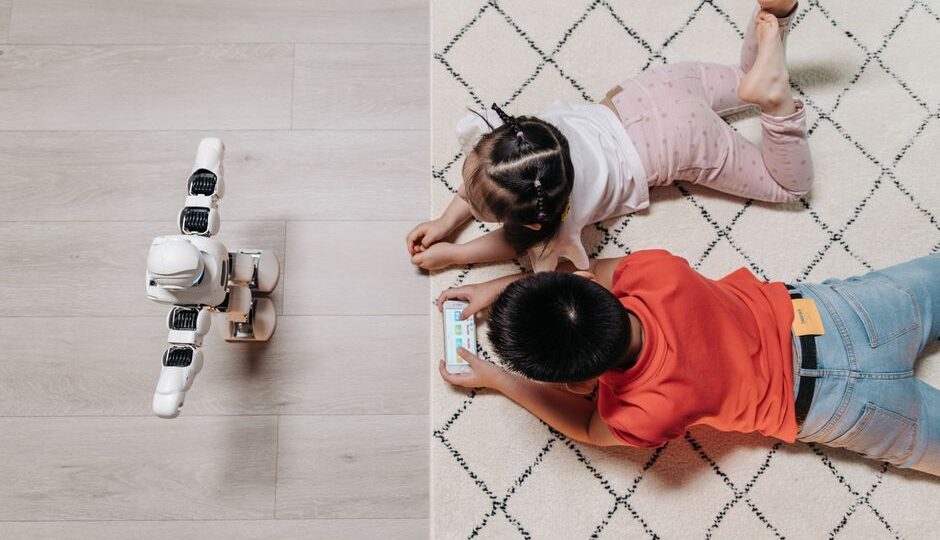
The AI-Driven Classroom: Personalized Learning Journeys
As we traverse through 2026, technology continues to shape and reshape the educational landscape. AI-driven platforms are now at the forefront, crafting personalized learning journeys for students across the globe. Tools like LearnMate and EduBot are revolutionizing how education is delivered, tailoring lessons to individual learning speeds and styles. This is not a one-size-fits-all approach; instead, it’s an intricate dance of algorithms that adapt to every student’s unique needs.
Imagine a fourth grader in London receiving math lessons specifically crafted to address her weaknesses, while her classmate in Sydney focuses on enhancing his strengths in science. This level of customization is proving to be a game-changer, with studies indicating a 30% increase in student engagement and performance.
Immersive Learning: VR and AR in the Classroom
The realms of Virtual Reality (VR) and Augmented Reality (AR) have transcended beyond gaming and entertainment. In 2026, the educational sector is harnessing these technologies to create immersive learning environments that were once the stuff of science fiction. Platforms like ClassVR and EduAR are leading the charge, bringing history lessons to life and enabling students to explore the pyramids of Egypt or walk through Ancient Rome from their classrooms.
These tools not only enhance engagement but also improve retention rates. A recent survey across North American schools reported that 85% of students found VR-based history lessons more engaging than traditional methods. The tactile, visual experiences are bridging the gap between theoretical knowledge and real-world applications.
Collaborative Platforms: Breaking Down Geographical Barriers
With globalization at its peak, collaborative learning platforms have become indispensable. Tools like GlobalLearn and CollabStudy are creating virtual classrooms where students across continents can work on projects together, fostering a truly global educational experience. These platforms are not just about sharing documents or video calls; they are about creating a synchronized learning environment where time zones and distances fade into the background.
Consider a biology project where students from India, Canada, and Brazil come together to tackle real-world environmental challenges. Such collaborations are nurturing a generation of culturally aware and globally competent individuals, ready to take on challenges that span beyond their local communities.
Gamification: Learning Through Play
Gamification is not a novel concept, but its implementation in 2026 has reached new heights. Educational tools like GameLearn and Quizlet+ are incorporating gamified elements to transform mundane lessons into engaging adventures. By integrating reward systems, leaderboards, and interactive quizzes, these platforms tap into the innate human love for play, making learning fun and addictive.
Schools that have incorporated gamified learning report a 40% increase in student participation and an improvement in knowledge retention. This approach is particularly effective in subjects that traditionally struggle with student interest, such as mathematics and science, turning challenges into opportunities for exploration and growth.
Accessible Education: Reaching Every Corner
While technological advancements are impressive, their real power lies in accessibility. In 2026, tools like EduAccess and LearnReach are ensuring that quality education is no longer a privilege but a basic right accessible to all. These platforms are designed to function on minimal bandwidth, catering to students in remote and underserved regions.
For instance, a student in rural Kenya can access the same level of education as his counterpart in New York City. Such tools are leveling the playing field, giving everyone the chance to learn and thrive, irrespective of their geographical location or economic status.
Takeaway: Embracing the Future of Education
The future of education is bright, diverse, and inclusive, powered by an array of innovative online tools that cater to the varied needs of learners worldwide. As we move forward, it’s crucial for educators, parents, and policymakers to embrace these technologies, ensuring that the coming generations are equipped with the skills and knowledge they need to succeed in an ever-evolving world.